Alienation, autonomy, and ideology

Category: Philosophy (Page 1 of 11)

These are posts on philosophy from the blog Base and Superstructure. My background is in academia, with a specific focus on feminism, philosophical issues in the social sciences, and social and political philosophy. I have also done work on historical figures such as J. L. Austin and Ludwig Wittgenstein. These posts incorporate some or all of these issues. The influences may be more or less explicit, depending on the topic. Philosophy can be intimidating, and so these posts present issues in a way that’s open to many people. There is also discussion of specific philosophical issues, and specific issues from a philosophical perspective, such as feminist accounts of pornography, Marxist and socialist accounts of the state and political economy, and the search for the best explanations for social and material phenomena.

Ending the Semester

After a nearly 11 year absence, I jumped back into the classroom in the spring 2026 semester. I taught the honors section of Intro to Philosophy at the University of Iowa, spending hours reworking my syllabus and retooling the course for what, at least in my mind, students might find more useful in 2026 than they did in 2015.

A few readers probably noticed this, given that I had to take a bit more time off from writing than usual. And on that note, I’ll thank regular readers for their patience. I know that post frequency moved a little closer to 3-4 posts per month rather than the usual 5 or 6.

Here are a few thoughts on how it went.

Continue reading

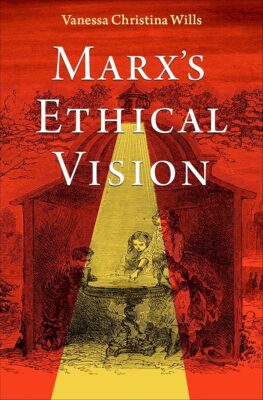
Marx’s Ethical Vision

Many authors to try explain Marx to puzzled readers. Vanessa Christina Wills’s Marx’s Ethical Vision is one of the best books on the topic.

Wills takes a cluster of ideas – the ethical content of Marx’s philosophy – and draws out these themes over the course of his career. Other Marx books I highly recommend – such as David’s Harvey’s commentaries on Capital – tend to focus on a deep reading of a specific text.

I think Wills’s project is more difficult to pull off. But she does it remarkably well.

Let’s take a look at Marx’s Ethical Vision.

Continue reading

Epicureanism 101: The Four-Part Remedy (Tetrapharmakos)

We’re now five posts deep into the Epicureanism 101 series! I’ll leave it to the reader whether to be happy or sad about this, but I’ll say that this is probably the final post in the series for now.

So far, we’ve built out a conception of Epicurean philosophy and its power to help us achieve happiness or flourishing in life. Epicurus advises us to achieve static pleasures, by which he means a state of tranquillity that comes from freedom from fear and mental disturbance. The way to achieve this state of tranquillity is by focusing on desires that are natural and necessary.

How, then, might we go about completing the picture? Epicurean philosopher Philodemus has the answer in the form of the four-part remedy, also called the ‘tetrapharmakos.’

Continue reading

Recent Biography of J. L. Austin

It’s unclear how many people want to read a 600 page biography of Oxford philosopher J.L. Austin. But count me among them. As an undergraduate, I made Austin’s paper ‘Other Minds’ the topic of my honors thesis. And even 20 years later, I’ve never lost the sense that there was something right about the method of ‘linguistic phenomenology’ Austin used in much of his work.

What was right about it? And how did it influence my own philosophical work? It can be difficult to say. I didn’t directly develop Austin’s ideas in my own articles and books. But my conceptual work begins from an understanding – we should situate philosophical concepts in relation to the everyday. This is to say that we must first understand – and only then expand upon or improve – ordinary notions.

As Austin put it, ordinary language is the first word.

On this blog, I’ve written a couple of reviews of books on Austin’s work. Readers can check those out here and here.

And so, with all this said, I was excited to read M.W. Rowe’s biography of the giant of ordinary language philosophy.

Continue reading

A Social History of Analytic Philosophy

I should start by saying that I found Christoph Schuringa’s A Social History of Analytic Philosophy enjoyable and informative. But it’s also rather spicy. Above all, it’s never dull.

I can live with that combo.

As someone trained in analytic philosophy, readers might expect me to dislike A Social History of Analytic Philosophy. After all, Schuringa takes an unsympathetic approach to the field. On the other hand, I did work that crosses the borders between the analytic and the Continental. And I sympathize with the critique of even ‘dissident’ analytics as using abstract and disengaged methods. So, readers might expect me to love it.

In reality, I neither disliked nor loved the book. I thought it had its merits and shortcomings.

Continue reading

« Older posts