I’ve got to admit, this time of year isn’t always my favorite transition. I love summers in Iowa City. We get to see what the place looks like as a lower key college town. And now we’re once again moving out of that.
As we hang on to the last parts of the summer, I’m reading a nice mix of things. What are you reading?
Judy Blume – Are You There, God? It’s Me, Margaret
Judy Blume wrote this classic decades ago. But most school age girls read it, and it’s the subject of a recent film, so I assume most readers need no introduction.
For the rest of you, it’s about a 12 year old girl who moves from New York City to suburban New Jersey. She has all the worries of a girl about to become a teenager, though most of all she’s worried about getting her period and finding the right religion.
It’s a delightful book – well told from the perspective of a kid and her struggles and joys. Though Blume wrote it more than 50 years ago, it works just as well today.
Suzanne Collins – Hunger Games Trilogy
Yes, I re-read the original Hunger Games trilogy. I thought it would make sense to do so before next year’s movie covering the second prequel, Sunrise on the Reaping.
I enjoyed the series the first time around, and I still enjoyed it the second time.
I’ve heard many people comment on the darkness of the two newer novels. And, indeed, they’re dark. But the original trilogy is quite dark in its own right. Reading it again served as a reminder of this.
Of course, in one sense, there’s nothing much surprising in these books. The movies follow the books pretty closely. And we all watched the movies.
But there are a few minor differences – a friend of Katniss’s, Madge, plays little role of note in the movies, but gives Katniss the Mockingjay pin in the books. The reader gets more of Katniss’s feelings toward Peeta and Gale in the books than in the movies.
Of course, the biggest difference is that the books follow a first-person narrative (primarily) from the perspective of Katniss. This provided the movies with a lot of space to expand on the narrative. And they did so extensively. They pair together quite well, with the filmmakers given plenty of space to work without contradicting Collins.
Gerald Lyn Early – Play Harder
I was excited to read this little history of baseball from the perspective of black Americans.
And for the most part, it delivers. Headed in, I knew a bit about the Negro Leagues. And, like any other serious baseball fan, I knew the story of Jackie Robinson’s integration of the game. But I didn’t know much beyond that.
This book fills in many gaps. It traces the history of black baseball well into the 19th century, placing black Americans among the very first players of the game. And it stretches well beyond Robinson into the rise of black players, the era of free agency, the decline of black participation after the 1990s, and the struggle to put more black Americans into team leadership positions.
I should note, though, that it’s more of a coffee table book than an academic tome. It aims at a general audience. In one sense, that’s fine. It made the book quite accessible. But I’ll admit I had hoped for a more scholarly treatment of many of these issues.
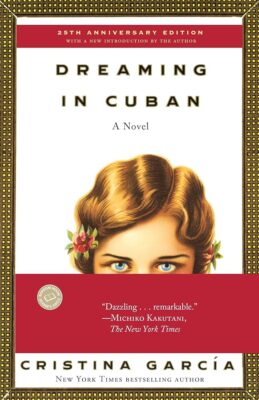
Cristina García – Dreaming in Cuban
This novel covers three generations of a Cuban family divided between Cuba and the U.S. by the 1959 Revolution – both politically and geographically.
García’s novel presents a broad overview of their lives from the 50s into the late 70s and early 80s. And the divisions over the Revolution split not only one generation from another, but also individual members of each generation.
To tell the story, García switches frequently between third person and first person. She also moves across time and location, using the letters written by the elderly grandmother to a former Spanish lover as an organizing device and, ultimately, as a way to explain her love of the Revolution.
The novel manages to pack quite a bit of story into this rather broad framework. The story frustrated me at times – especially the parts focused on Felicia, the grandmother’s second daughter. At times I found myself skimming. But, in the end, I’m glad I finished reading. It’s a story well told.
Dean Spade – Love in a Fucked-Up World
Dean seems to want to unite politics and relationships into a radical, democratic practice. It’s not a bad idea for a book. And at times in the introduction and the final chapter, I even see a bit of this union shine forth.
The trouble is that for the middle 250 pages or so, it mostly reads like conventional, common sense relationship advice – if, perhaps, laid on a bit thick and in a somewhat ponderous way. In short, there’s little here that you wouldn’t get from a better-written book by a good psychologist.
Spade’s advice isn’t bad. He gives tips for better communication and expression of needs. And in speaking to queer and leftist subcultures, he might reach an audience that otherwise wouldn’t receive it. He also keeps the book hip and relevant to a wide range of alternative communities. Those are positives.
But the book doesn’t do much to deliver on its core idea.
Bob Woodward and Scott Armstrong – The Brethren
Even though this was probably the best researched and best known book on the Supreme Court written in the 1970s, it was written in the 1970s. Why read it now?
Woodward and Armstrong give us a study of how 9 smart and conscientious – but ego-driven – professionals work together on a collaborative project where no one really has more power than anyone else. That feels relevant.
So, how do they do it? They use a lot of memos! Or, for a more serious approach, they lobby and argue with one another, covering everything from the intellectual aspects of each case, to the details of the law, to pragmatics and politics.
That’s one way of looking at the book. For another level, many of the issues the Court addressed during the terms Woodward and Armstrong examined – everything from the death penalty to abortion to baseball anti-trust issues to desegregation to pornography and obscenity – are still relevant to legal cases today. Many of these issues still resonate with people.
And let’s not forget the fact that the authors present a rather opinionated image of the Court – a picture where Chief Justice Burger is rather unskilled and politics, and where Rehnquist is more than a bit of a Nixon lackey.
All in all, I really enjoyed this book. But it’s long and full of details.
