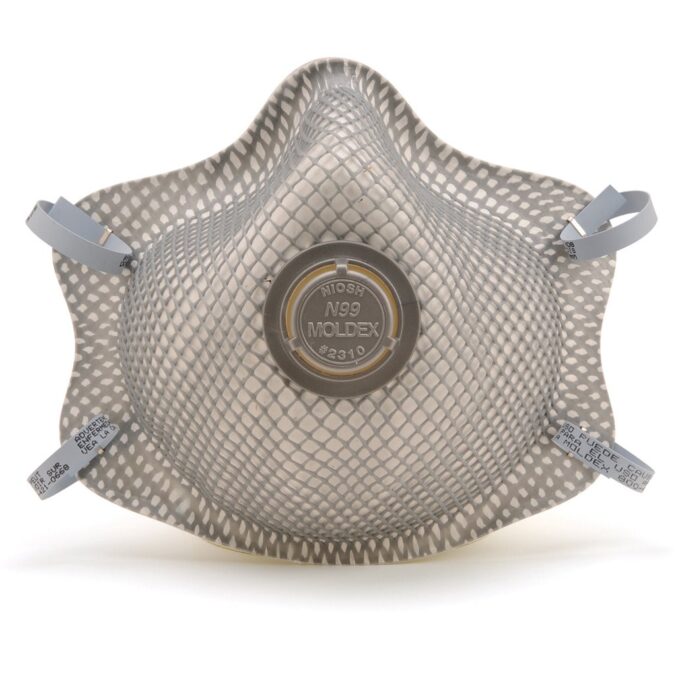
A local guy named Mason (note: not his real name) goes to lots of local events – political events, activist meetings, festivals, and so on. He’s somewhat older, friendly but rather awkward, and overall a good natured person.
He also still wears a mask in 2025.
Sort of.
To put it more accurately, sometimes he wears a mask and other times he doesn’t. And there’s little discernible pattern to it. Whether or not he wears a mask doesn’t seem to follow any risk assessment related to Covid-19. It’s not just that he’s not at elevated risk – though he almost certainly isn’t – but at times I even see him wearing a mask while he’s outdoors and not in a crowd and then taking the mask off or wearing it on his chin when he joins an indoor meeting.
I’m not trying to pick on Mason here. He’s a good guy. My point is that his behavior tracks a lot of what I see. I’ve seen a few dozen or so local characters who fit a similar profile during the pandemic. Most of them gradually reduced or cut out their mask usage by last year.
A few remain holdouts.
Many Reasons to Wear a Mask
So, why do people wear masks in 2025? Some wear them because they’re still in a high risk group. And some wear a mask because they spend time with those at high risk. This includes friends, family members, health care and service providers, and so on.
These are sensible decisions. For the few who remain at high risk, a mask makes sense.
Others believe they’re in a high risk group, even though they’re not. Medical advice shifts over time, and the range of conditions that place one at high risk is narrower now than it was in 2020-2022. Plus, the overall danger to the community is far lower now than a few years ago. And still others wear masks out of a sense of solidarity or a desire to protect the broader community.
While understandable – even admirable in some cases – these are less sensible decisions that likely have no practical impact.
But I’m not talking about any of these groups in this post. I’m more interested in the people like Mason – those who continue wearing masks despite not being in a high risk group, not surrounding themselves with people at high risk, and not driven at a fundamental level by a utopian notion of solidarity or community.
Anxiety as One Reason
My sense is that anxiety drives this group. For some, this amounts to social anxiety. And I strongly suspect Mason is in this camp.
Why say this?
I find it in the pattern with which people use masks. When meeting someone new, the mask goes on. When there’s a conflict or disagreement, the mask goes on. But when people find themselves among friends in a comforting and non-threatening environment, the mask comes off.
This behavior clearly isn’t about health. It’s about emotional comfort.
But for others, it amounts to health anxiety. Anyone familiar with the ‘Covid conscious’ community sees evidence of health anxiety all over the place. People cherry pick the research and work themselves into a frenzy. They string together individually plausible claims that apply to narrow cases and build it into a wildly distorted picture of the actual risks from Covid in 2025. Using studies from the pre-vaccine era to estimate risk in 2025 is one of their signature moves.
As someone who has suffered from (periodic, mild) health anxiety in the past, I can relate. And I know health anxiety is hard to shake off. It’s amazing how quickly and devastatingly it strikes. Modern “AI” is also a major and underappreciated contributor to health anxiety in the Covid era, with people selectively pushing AI to bolster their biases and distorted images of the world.
It’s a tough world for anxiety sufferers.
The Evermaskers?
I read an article in The Atlantic by Daniel Engber that makes the best attempt I’ve read at getting this story from the perspective of people who mask in 2025 due to anxiety. He labels this group ‘the evermaskers.’
Engber carefully works through some of the tortured reasoning people put together to provide evidence to support their anxiety and justify their mask use. It’s complicated, unfortunate stuff. What’s especially notable is the turn it has taken in the last couple of years. Until about 2022, evermaskers actually stood at the forefront of the defense of scientific reasoning. Now they do things like call public health officials ‘eugenicists’ and wildly overestimate the prevalence and severity of Long Covid.
Why the about face? As it turns out, it was never really about science. They endorsed science when it agreed with them, and now they blast it when it doesn’t. Getting people out of this mindset remains a challenge. It can take years for people to even realize the danger this stuff poses to their mental health and social lives.
Society’s bubbles make it even more difficult to recognize. As Engber points out, regular maskers make up about 4% of the U.S. population at this point. Assuming those who suffer from anxiety make up about half this group, this makes them the equivalent of an Internet era counter-culture.
It’s one more reason why placing yourself in a closed epistemic community is a bad idea. Internet era bubbles and counter-cultures make it difficult to support those close to us when they struggle with these issues.

Leave a Reply