I know that with climate change, it’s a bit difficult to tell when one season ends and another begins. But by the calendar, this is the first reading list of the summer of 2025.
It’s always nice to start thinking about summer reads. And I hope this year is no different from any other in that regard. I’ve got plenty of things on my list. Let me know about yours!
Jonathan Allen and Amie Parnes – Fight
I’ve been reading the Allen and Parnes campaign book series for some time. This book brings me fully up to date with the 2024 campaign. But I’ve got to admit that this is the weakest of their series.
They cover all the campaign basics, focusing this time on the drama around the end of the Joe Biden campaign and transition to Kamala Harris. By contrast, they don’t have a lot to say about Trump and the GOP side. I suppose they considered it a foregone conclusion that Trump would take the nomination.
More than anything, the book feels rushed and underdeveloped. They don’t provide much depth to the strategic discussion or implications of the election. They say little about policy or debate. However, to be fair, they point to lack of depth as itself a product and shortcoming of the Harris campaign.
In the end, I found this book a bit sloppy and littered with mistakes. There’s probably a good article in here somewhere. But it’s not enough for a full campaign book.
Stephen C. Angle – Growing Moral
This is another entry in the Oxford Guides to the Good Life series. This one sits at the rough midpoint between religion and philosophy, with Confucianism perhaps best described as a ‘way of life.’ Angle catalogs the most important points of Confucian thought before turning to challenges for the system.
As Angle describes it, the Confucian way of life centers on an attunement to the world we might call reverential attention. It begins from our relationship with our parents or caregivers, which remains important throughout our lives. We should, as the Confucian puts it, obey our parents.
But Angle argues that this is not obedience for its own sake. Rather, we obey as a central way to cultivate virtue. From following rituals to cultivating moral dispositions to read, write, and reflect, the Confucian focuses on continuous improvement and learning. Angle therefore centers this book on the cultivation of human virtues, the deepening of commitment to them, and working toward the eudaimonist goal of sagehood.
The Confucian arrives at sagehood through finding harmony in moral conflicts, as well as gradual growth and moral skill development.
Finally, Angle addresses common objections to Confucianism. People worry that it’s outdated, patriarchal, or grounded in an ancient Chinese mindset we should set aside. While Angle finds these criticisms legitimate, he thinks we can abstract the core principles of Confucianism to apply to a modern world.
Will Bardenwerper – Homestand
What’s a summer without baseball?
This book tells the story of a baseball team in Batavia, New York. And with it, Bardenwerper broadens to tell a story about baseball in small town America.
Batavia’s Muckdogs played for decades as a minor league team before losing its team as a part of a major contraction of the minor league system in 2020. By the time the author visited in 2022, Batavia reformed the team as a collegiate summer league team.
As Bardenwerper shows, baseball fans are a resilient lot. He gets to know local characters who span the political spectrum, careers, and overall approach to life. But they come together around baseball. It’s a firm reminder that small town America is diverse in its own way. Often it’s more ideologically diverse than larger towns or even cities.
He tracks the Muckdogs through the 2022 season, from the time the team members meet to their playoff run. And he intersperses the games, the fans, and the town with a running critique of Major League Baseball.
The critique of MLB hits hard, if a bit repetitively. But for baseball fans, the book is worthwhile. It’s a reminder that the essence of baseball lies in how it brings people together. We get to know one another around a common atmosphere. The pro sport often loses sight of this.
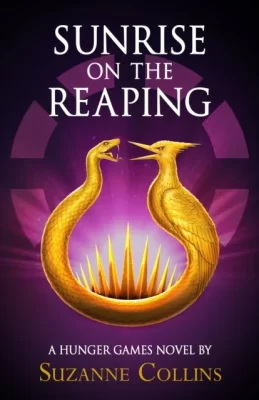
Suzanne Collins – Sunrise on the Reaping
The Hunger Games was probably the most famous book series of the 2010s. And one thing I love about it is that it was always fresh. That made me a bit nervous for this one. In theory, it’s a story we already know – Haymitch wins the 50th Hunger Games. And something about it drives him to a life of drunkenness.
But I never should’ve doubted Collins. She tells an excellent story that forms the perfect bridge between the first prequel and the original trilogy.
So, what happens? Haymitch enters the games due to some Capitol fuckery. I won’t say much about that, to avoid spoilers. But I’ll say that he meets the younger version of many characters important to the original trilogy. And his love story runs in many ways parallel to Snow’s from the first prequel.
Collins needs to retcon a bit to make this work, but it’s plausible enough. And she wraps the story in a creative use of Edgar Allen Poe – as well as David Hume’s philosophy.
I’d highly recommend.
Sharon Wahl – Everything Flirts
Wahl writes a series of shorter stories around philosophical themes. She begins with the work of philosophers such as Bentham, Nietzsche, and Wittgenstein, wrapping love stories around their ideas.
Does it work? More or less. The ideas and stories don’t always quite work together. At times, it feels forced. But it’s an interesting idea, and Wahls pulls it off in a way that adds to the story.
It’s a quick read, and I’m glad I picked it up from the library.
