Alienation, autonomy, and ideology

Category: Activism (Page 27 of 30)

These are posts on activism from the blog Base and Superstructure. This takes many forms. The focus here is on political activism, above all on activist organizing and base-building. One concern is how to build effective movements. There’s also a need to create solidarity with fellow members and build coalitions with other groups. The main aim of good movements is to work together to advance material interests. This section also includes critiques of electoral work, and discussion of how and when to use elections to advance activist goals. Navigating the balance between grassroots work and electoral work is difficult for everyone.

4 Reasons to Learn Spanish

I’ve tried to learn Spanish several times, but I’m sorry to say I haven’t had much luck. The first time was in high school, and my high school offered the choice faced by many in United States rural and/or lower income communities: a couple of French classes or a couple of Spanish classes. I chose Spanish. The courses were painfully slow, and I didn’t pick up much.

Later on in college, like many former Catholics who majored in philosophy, I took Latin courses for my language requirement. Latin obviously isn’t Spanish, but it’s helpful. And then, about 6 months ago, I took up Spanish again via podcasts called Coffee Break Spanish.

More Americans should learn Spanish. Why? Minimally, Americans should learn some language other than English. Many Americans make it through life as total monolinguists. This is much less common in lots of other places. And, sadly, I count myself among the Americans who don’t really know a second language. Sure, I can muddle my way through lots of Latin texts and some German texts. I’ve picked up a basic understanding of Spanish, though I still can’t speak it.

I think all that’s a shame. It’s a manifestation of US-chauvinism and our excessively English-centric international business, cultural, and scientific climates.

Continue reading

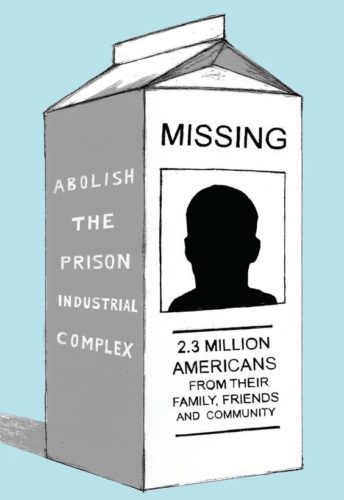
Prison Abolition: Variations on a Theme

‘Prison abolition’ doesn’t sound complicated. It’s abolishing prison. Done. Put that shit through a spell check, clock out early, and fly a kite. But it is complicated. Go figure.

I recently saw a Twitter thread on the term ‘prison abolition’. Here’s the background. Alexandria Ocasio-Cortez wrote some tweets explaining and defending limits on the prison system, using ‘prison abolition’ as a hook. Carissa Byrne Hessick, a criminal law professor and director of the Prosecutors and Politics Project, responded.

Hessick largely agreed with AOC, but she objected to AOC’s use of ‘prison abolition’. She thought AOC misused the term. Why? Well, AOC doesn’t advocate abolishing all forms of imprisonment or confinement under a judicial system. Rather, she wants to close most prisons and release many prisoners. Since ‘prison abolition’, according to Hessick, means to eliminate all of those things, AOC misused the term. Perhaps in a politically motivated way?

Is Hessick right? I’ll argue she’s not. Or, at least, I think we can build a coherent concept of ‘prison abolition’ that doesn’t abolish all forms of confinement. Whether AOC’s on board with this is a separate issue.

Continue reading

Tenants Unions and Public Speaking

Hi all – I’ve got a couple of upcoming public speaking events on tenants union activism! First, a brief talk with a college class. That’s not a public event, exactly. Second, a brief chat during a breakout session this Saturday at the Quad Cities Socialism Summit, hosted by the Quad Cities DSA. It’s this weekend.

Public speaking isn’t exactly my favorite thing to do, but I’ve gotten comfortable enough with it over the years.

As I’m sure some of you are aware, I’ve written about tenants unions here before. And I’m a board member of the Iowa City Tenants Union. We held our first meeting back in June, and now we’re hard at work on various issues related to security deposit theft, maintenance, discrimination, direct action, utilities justice, and housing policy.

DSA Caucuses: What’s the Deal?

dsa caucuses

The Democratic Socialists of America recently held its 2019 National Convention, and I wrote earlier about its preconvention event in Chicago. You probably know the DSA grew from maybe 6,000 members to about 55,000 members around and after the 2016 US presidential election. Over the course of that time, the group moved significantly to the left. I’ll say more about this later in a post on the DSA itself, but it transitioned from an organization of liberals and progressives to one of social democrats-to-socialists. It endorsed John Kerry in 2004 and BDS in 2017. You know, that kind of change. The DSA Caucuses make up much of the group’s politics.

Some of you might not know much about the DSA Caucuses, especially those of you who aren’t part of the largest chapters or social networks. Here in Iowa, our DSA Chapters build working class and tenant power via tenants unions. As well as other local and regional projects. By contrast, the DSA Caucuses mostly focus on national issues or national structure. They’re not obviously relevant to our work. As a result, many of us don’t know much about them.

In a similar boat? This post is for all of you.

Continue reading

Two Concepts of White Privilege

white privilege

Source: Philip Cohen (https://www.flickr.com/photos/philipcohen/38444249116)

The concept of white privilege is central to contemporary social justice movements. And though there are disagreements, there’s a broad consensus on what white privilege amounts to. Roughly, white privilege is a set of benefits one gets merely in virtue of being white. Society confers these benefits not due to wealth, effort, or any other feature, but merely from whiteness. These benefits might be economic, political (e.g., citizenship status), or something much less tangible.

But this idea that white privilege is a benefit to whites was not always central to the concept. There’s an older concept of white privilege complicating this picture. On that older concept, white privilege often had short term benefits for whites. But those came at the expense of long term harm to working-class organizing that hits both whites and non-whites.

Continue reading

« Older posts Newer posts »