Welcome to our fifth reading list of 2026, where we’re well into spring, the semester has ended, and we’re all ready to get down to business and read!
This month’s list is a mix of politics and everyday life. It’s also a mix of good and bad reads. Hope you enjoy!
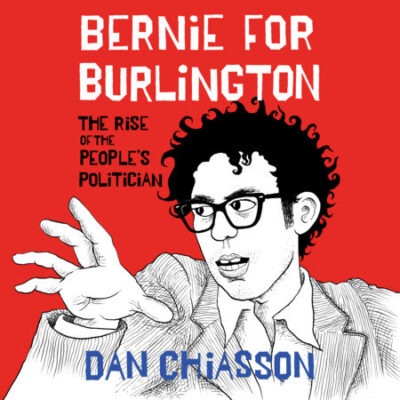
Dan Chiasson – Bernie for Burlington
At the surface, this is a book about the time Bernie Sanders spent as mayor of Burlington, Vermont – his political coalition and governing a small city as a leftist in the far right Reagan era. However, under the surface, the book is many things. It’s a history of Vermont and New England in the 1960s, a history of Sanders, and a collection of U.S. counterculture.
We see many sides of Bernie – his working class background, his trust for regular people over the ‘professional class’ liberals and progressives, and so on. But we get one lesson again and again. Bernie always turned toward substantive, material politics and connections with people over the symbolic politics of the counterculture and the academics. This stands in tension with Bernie’s founding of the modern progressive movement.
Bernie learned many lessons the hard way, notably through his experience with the Liberty Union Party. But he combined this with a strong critique of U.S. capitalism – via everything from his odd itinerant lifestyle to his educational filmstrips and documentary filmmaking!
His time as mayor proceeded similarly to the rest of his career, including his presidential campaigns. Not only did he use a similar platform, he also faced the same opponents. These included Democrats embedded within the power structure, opposed to people’s involvement as protagonists in their own lives, and hysterical in their red-baiting and raising of absurd arguments against Sanders.
Two things stand out. First, Bernie always balanced actual leftist goals with avoiding getting close to ‘progressives’ or ‘lifestyle leftists.’ And, second, Bernie recognized that America’s lurch toward the right was a big part of the reason people supported him. He used this strategically and effectively. But he never believed, even for a second, that he had converted the masses to socialism.
Scott Galloway – Notes on Being a Man
It’s been awhile since I’ve been so back and forth on a book.
In theory, this book begins from the alleged ‘crisis’ faced by boys and men in the modern world. And it offers answers roughly in the style of Richard Reeves. In practice, it’s more of a memoir wrapped in political musings about manhood in modern America.
But is it good?
Yes and no. I’d say about 70% of the book is relatively thoughtful and engaging. Galloway dispenses a lot of good advice. He says to love your kids, give more than you receive, and so on. With that said, the other 30% of the book is the musings of an aging frat boy who accepts a variety of stereotypes about manhood and masculinity.
In the end, my conclusion is that I’m not really the target audience for this book. I suppose that for the people who need it, this book has some things to offer. For others, I’d recommend passing.
I should close by noting that I read this book, in large part, because I had heard Galloway mentioned as a possible presidential candidate. Hopefully that’s not a thing that happens.
Atul Gawande – Better
Gawande is one of our better medical writers out there. And I greatly enjoyed his book on mortality and elder care called Being Mortal.
This is one of his earlier works, and it covers the topic of unevenness and improvement in medical performance. He bounces around quite a bit, moving from the importance of washing one’s hands all the way to imbalances in hospital performance even in highly specialized care.
Along the way, he provides many insights we can draw in any profession. I especially appreciated his nuanced discussion of medical malpractice lawsuits. He talks about how they frighten doctors and drive up the costs of care, while also bringing genuine relief and peace of mind to people who have been wronged by the medical system.
Ultimately, I don’t think this is Gawande’s strongest work. But it’s very much worth a read.
Scott Samuelson – The Deepest Human Life
This is an introductory philosophy book from a local professor here at Kirkwood, who weaved an interesting path from Continental philosophy grad student to community college professor.
He introduces the field in a very accessible, easy to read way. But he focuses the field in a way I particularly like. And it largely matches my own Intro to Philosophy course, beginning from the Hellenistic era. But then he takes a detour into very different territory, getting into questions of philosophy of religion and existentialism.
I appreciated Samuelson’s take on the ancient Greeks, and he connects with the reader in a way I find impressive. Telling his story of restaurant work to explain Epicurus was a particularly compelling rework of the common misunderstanding of Epicureanism as commitment to extravagant food. It’s a shame I never made it out to the restaurant during my time in Iowa City.
The material in philosophy of religion didn’t spark my interest as much. But Samuelson has a real knack for making Descartes and especially, surprisingly, Pascal relevant. Sprinkling stories of his students lives and reactions throughout was a move I also appreciated.
Lisa Sanders – Diagnosis
This is a book of short medical mysteries – brief descriptions of hard to diagnose cases from Sanders’s New York Times Magazine column.
Sanders organizes the book by symptoms, including everything from fever to abdominal pain to headaches. Many of these are the most common symptoms doctors find among their patients. However, as Sanders points out in her introduction – and repeatedly demonstrates in the stories – many illnesses have the same symptoms.
And therein lies the major diagnostic struggle. Sanders does a nice job laying out some of the methods and difficulties in medical diagnosis. I did, at times, find myself wanting her to continue the story and tell us more.
