Alienation, autonomy, and ideology

Category: Books (Page 2 of 26)

These are posts about books from the blog Base and Superstructure. Occasionally I’ll read a book worth talking about, and write some thoughts on it. These cover a wide range of topics from the blog.

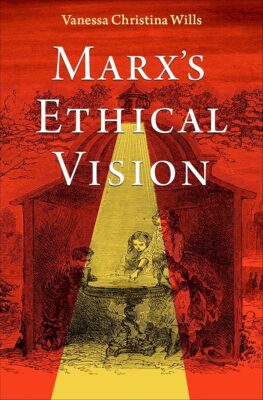
Marx’s Ethical Vision

Many authors to try explain Marx to puzzled readers. Vanessa Christina Wills’s Marx’s Ethical Vision is one of the best books on the topic.

Wills takes a cluster of ideas – the ethical content of Marx’s philosophy – and draws out these themes over the course of his career. Other Marx books I highly recommend – such as David’s Harvey’s commentaries on Capital – tend to focus on a deep reading of a specific text.

I think Wills’s project is more difficult to pull off. But she does it remarkably well.

Let’s take a look at Marx’s Ethical Vision.

Continue reading

Recent Biography of J. L. Austin

It’s unclear how many people want to read a 600 page biography of Oxford philosopher J.L. Austin. But count me among them. As an undergraduate, I made Austin’s paper ‘Other Minds’ the topic of my honors thesis. And even 20 years later, I’ve never lost the sense that there was something right about the method of ‘linguistic phenomenology’ Austin used in much of his work.

What was right about it? And how did it influence my own philosophical work? It can be difficult to say. I didn’t directly develop Austin’s ideas in my own articles and books. But my conceptual work begins from an understanding – we should situate philosophical concepts in relation to the everyday. This is to say that we must first understand – and only then expand upon or improve – ordinary notions.

As Austin put it, ordinary language is the first word.

On this blog, I’ve written a couple of reviews of books on Austin’s work. Readers can check those out here and here.

And so, with all this said, I was excited to read M.W. Rowe’s biography of the giant of ordinary language philosophy.

Continue reading

A Social History of Analytic Philosophy

I should start by saying that I found Christoph Schuringa’s A Social History of Analytic Philosophy enjoyable and informative. But it’s also rather spicy. Above all, it’s never dull.

I can live with that combo.

As someone trained in analytic philosophy, readers might expect me to dislike A Social History of Analytic Philosophy. After all, Schuringa takes an unsympathetic approach to the field. On the other hand, I did work that crosses the borders between the analytic and the Continental. And I sympathize with the critique of even ‘dissident’ analytics as using abstract and disengaged methods. So, readers might expect me to love it.

In reality, I neither disliked nor loved the book. I thought it had its merits and shortcomings.

Continue reading

« Older posts Newer posts »