Alienation, autonomy, and ideology

Category: Elections (Page 2 of 20)

These are posts on elections from the blog Base and Superstructure. Topics include international elections, American elections, and local Iowa elections. There’s a particular focus on describing and explaining leftist electoral results.

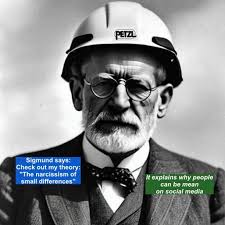
The Local Politics of Small Differences

We’re in the middle of a city council election cycle in Iowa City. Plenty of people are getting worked up about it.

In some ways that’s a good thing.

It means we live in a politically engaged city. And there are lots of issues for us to tackle. On top of this, the previous election – a special election between Ross Nusser and Oliver Weilein – offered deep, meaningful differences on how to run a city in a revanchist era. Its results emerged from a realignment of our local politics.

But this election strikes me in a different way.

At least four (and possibly five or six) of the six candidates aren’t very different from one another. They practice broadly similar politics. However, people think they’re different. This calls for a closer examination of the forces that push people to over-invest in local electoral politics.

Let’s do that.

Continue reading

Rob Sand and the 2030 Coalition

Iowa Democrats have spent nearly a decade and a half in the wilderness. The trip started around the time Chet Culver lost his bid for re-election in 2010. It never stopped.

From that point, Democrats lost statewide races from the top of the ballot to the bottom, with Obama’s 2012 win one of the few successes. State Auditor Rob Sand, who we’ll talk about shortly, is another.

Why?

It’s a long story. That story runs through the decline of unions, political shifts in the 2010s, and partisan realignment by educational attainment. Every left of center Iowan has their own (usually self-serving) story to tell. But each one ends the same way – Iowa Democrats are left playing for a firm minority of the electorate.

They’ve done little to solve the problem.

Several years ago, I called for Iowa Democrats to build a 2030 coalition. Why? With Iowa’s hard turn to the right, it’s unlikely their current coalition will win. So, they should build a future coalition that can win. That coalition rests on the strength of young people, political independents, non-whites (especially Latinos), and immigrants. These are all growing populations who often don’t vote for Democrats.

But Iowa Democrats weren’t interested in a 2030 coalition. They wanted to win now.

Continue reading

Polarized by Degrees: College and American Politics

Readers know I do a monthly book roundup, where I write briefly about 4 or 5 books I’ve recently read. But every now and then, I find myself wanting to say more about a particular book. Polarized by Degrees by Matt Grossmann and David A. Hopkins is one of those.

For one, it’s timely. Most of us know there’s something wrong with U.S. politics, even at the level of everyday discussion. Things get heated and contentious. Many Americans – particularly members of marginalized groups – feel unwelcome in their own country. And we see rising levels of hate crimes, often with politicians openly egging them on.

This situation leads some of us to look for the source of the unrest. What divides us?

According to the chattering classes, especially pundits, identity forms the dividing force. We see this from both progressive and conservative ends, with the former blaming racism and/or toxic masculinity and the latter blaming the ‘woke mind virus’ or some such. It has gotten to the point where I use the term ‘identitarianism‘ to get at the assumption shared by both progressives and right-wingers that politics and/or political explanation reduce to identity.

After the dust settled from the 2024 election, people combed through the data to see how the vote broke down by demographic groups. And, of course, they brought their identitarian assumptions to the table. They wanted to know how race and gender drove the vote. Because what else could have done it?

And so they brought out the standard playbook of questions. Did Harris lose because ‘ugh, white women again!’? Did she lose because black men ‘abandoned’ her?

In Polarized by Degrees, Grossmann and Hopkins suggest something else matters more than identity.

Continue reading

Two Iowa City Realignments

Here in Iowa City, the votes are in. And just as in last month’s primary, Oliver Weilein won big! He won despite strong efforts to defeat him by housing industry interests and Iowa City moderates. And, to boot, he won despite spending very little money and most Democratic officials endorsing his opponent.

Of course, our city council elections are non-partisan. That helped a great deal on the final point.

I’m very glad Oliver won. He brings a much needed perspective to the council. But I’ve already said some words about all that.

In this post, I’ll sketch out the big picture by drawing a deeper comparison from Oliver’s win to our 2015 city election.

Continue reading

« Older posts Newer posts »