We’re finally hitting the summer, and so it’s time to talk about summer reads!
I’ve given a few highlights from my own reads. How about yours?
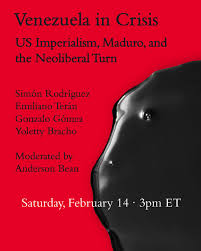
Anderson Bean – Venezuela in Crisis
Haymarket put out this collection of essays on Venezuela right before the disastrous US kidnapping of Nicolas Maduro. So, there are opportunities and risks here. The book could become dated quickly. But in practice it provides a snapshot of why the US so quickly converted the Bolivarian Republic to the US side of the imperialist divide.
The book gives us a collection of essays from Venezuelan leftists on how and why the Bolivarian Revolution failed. Most of the essays come from various Trotskyist factions. It’s a worthwhile project – both because its failure saw the end of the most promising vision of 21st century socialism and because quite a few leftists still inexplicably defend Maduro’s authoritarian neoliberalism in the name of ‘anti-Imperialism.’
Whew!
The authors disagree over exactly when the Bolivarian Revolution failed. But all agree that Maduro was a disaster for the country. Some trace the failure to Hugo Chavez’s excessive dependence on oil, failure to build beyond social democracy, and failure to expand the oil economy. Others think things would’ve been OK had Chavez remained alive and that Maduro’s authoritarian direction wasn’t inevitable.
I’d recommend readers check it out, read carefully, and come to some decisions. In our leftist movements, we should definitely analyze the case of Venezuela.
Ruixue Jia and Hongbin Li – The Highest Exam
This book from a pair of Chinese born economics who have moved to the United States concerns China’s educational system and how it operates within Chinese society.
As Jia and Li present it, China’s educational system constitutes a ‘centralized hierarchical tournament.’ The idea is that the nation structures its educational system around preparation for – and fallout from – the gaokao exam. This is China’s rough equivalent to the SAT or ACT in the United States. However, gaokao plays a far more central role in college admissions and the organization of one’s life and career.
From this starting point, Jia and Li take a look at other aspects of Chinese society. They consider everything from its use of standardized testing to help balance against corruption and weak institutions, to how the values inculcated in the gaokao and gaokao preparation come to structure Chinese – and Chinese-American – institutions.
It’s a highly worthwhile book for anyone interested in a comparative study of educational systems.
Stephen King – The Long Walk
This is an early King novel, written under the name Richard Bachman. And while I’m not a fan of Stephen King, I think this is a pretty good one. It was also turned into a film recently, which is how I came across the story.
So, what’s going on here? In short, in a mostly unexplained alternative history, an army group led by a man called ‘the Major’ runs a continuous walk. Each Long Walker must keep a pace of 4mph without stopping. After three warnings, they’re shot. However, they lose a warning if they again keep pace for an hour.
The Long Walk appears to be some kind of national event in a dystopian world, where cheering crowds watch and root on their favorite. Most of the story covers the emotional toll the Long Walk takes.
We don’t know exactly how this world came about, but King offers a few clues. He mentions an air blitz by Germany on the U.S. near the end of World War II, and we get various hints that nuclear strikes occurred.
I think it’s a compelling story, though the film version presents a far more realistic version of it.
Madeline Miller – The Song of Achilles
First of all, and most obviously, this book is a retelling of The Iliad. It focuses on the relationship between Achilles and his companion Patroclus. Patroclus serves as our narrator, and we dive into the childhood of the two characters as they meet and grow into the people we find fighting the war in Homer’s story.
Miller approaches the story as a romance, which is a common enough reading of the Achilles and Patroclus relationship. She does so in a skillful way. I found the romance believable and sympathetic.
With that said, it’s a distinctly modern reading from a modern perspective. My own reading of The Iliad is that Achilles’s outpouring of emotion was just something more widely accepted in the ancient Greek world than the modern one. Achilles and Patroclus struck me less as ‘married’ than as best friends, though they probably were lovers, at least to some extent.
And so, I found it to be a great story, but not a great ‘retelling’ of The Iliad and the Homeric mythology.
Adam Phillips – Going Sane
In theory, this is a book by a psychoanalyst who analyzes the notion of sanity. The thought is that while we have a pile of literature from many traditions on the notion of madness, we have practically nothing on the sane.
It’s a plausible starting point. And I think Phillips makes his points. For instance, ‘sane’ appears to pick out contradictory traits at times, and its relationship with madness is interestingly explored in works of literature. It seems to be much less clear and spelled out than madness.
But I never got the sense that this book took these insights much of anywhere. I put it down about half way through and returned it to the library.
Maybe you’ll get more out of it than I did.

Leave a Reply