Noam Chomsky and Michel Foucault sat down for a debate in the early 1970s. You can watch the whole thing here. The transcript, along with some related essays from both Chomsky and Foucault, is available to buy as a book. It’s known as the Chomsky-Foucault debate.
I wasn’t new to either Chomsky or Foucault when I watched and read the Chomsky-Foucault debate. And the short debate format has its clear limits. But I did come away with a few impressions and lessons learned.
Last weekend, I hit the road for a trip to Chicago. I was attending the Democratic Socialists of America (DSA) Chicago preconvention meeting. Here are some thoughts on that.
Source: Robert Ashworth (https://www.flickr.com/photos/theslowlane/6000734775)
I’ll begin from this insight: certain kinds of personal relationships seem to ‘fit’ better with certain economic forms. That’s one (possible) implication of the ‘base and superstructure’ thesis, after all. But that’s just a starting point.
I think of this in roughly the same way Marx did, so long as we interpret Marx in a way that avoids any kind of hardcore historical determinism or teleology. The relationship between economic relations and personal relations isn’t one way and deterministic. The notion of a causal feedback loop is better, though that, too, has its shortcomings.
Rather, it’s a dialectical relation. As David Harvey points out in his Companion to Marx’s Capital, we’re talking here about a highly fluid and transformative relation. One that’s always in motion. The base and superstructure co-evolve, as it were. The base perhaps sets a basic tone, or a set of limitations, and/or an ‘easier’ path. But it’s much more open-ended than any deterministic relation or feedback loop allows.
And so, let’s start with some basic questions. What kinds of relationships best fit our current situation in the United States, which we might describe as ‘neoliberal capitalism’ or ‘financialized capitalism’? How do those relationships differ from those that fit the Keynesian consensus? Or the even earlier stages of industrial capitalism?
I’m writing here about polyamory in light of this background.
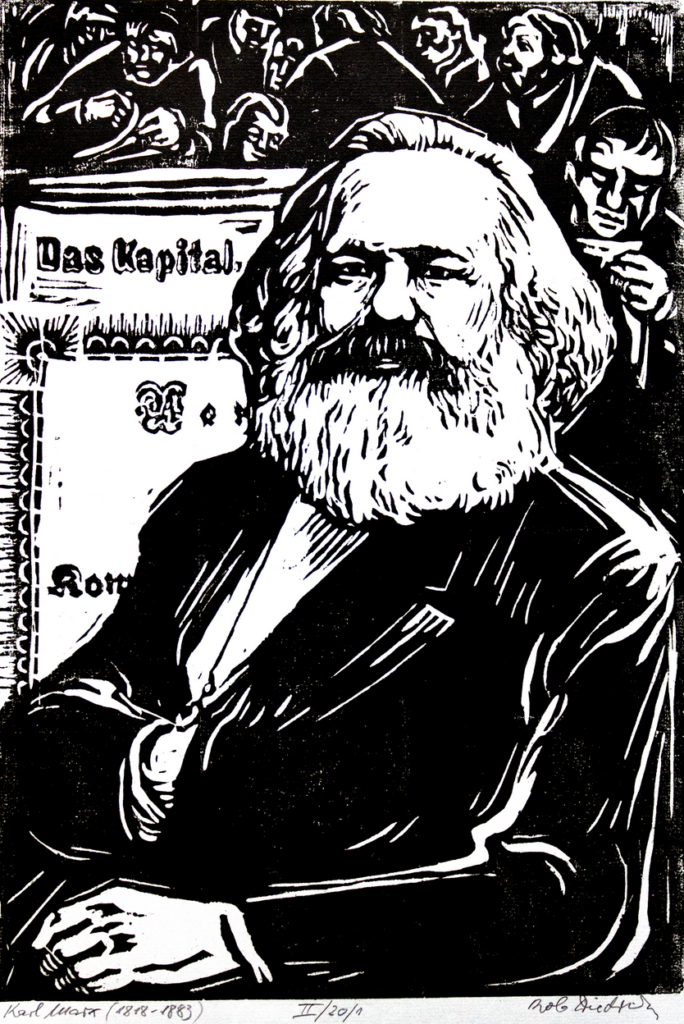
So you’ve bought Volume 1 of Marx’s Capital, or you’re thinking about buying it?
Good for you! It’s a fantastic book, and you should read it! Capital is worthwhile for its historical significance alone, both to politics in the last 150 years and to philosophical and intellectual developments. But it’s also a highly relevant book to our currenttimes. Particularly in an era of neoliberal or financialized capitalism, where many of the conditions Marx wrote about resurface.
Personally, I would’ve liked a bit more guidance when I started reading. I fumbled around quite a bit, and it took me awhile to understand what Marx was doing in the text.
There’s no point in beating around the bush. Most writing on the topic is terrible. Politics, religion, and/or ideology lead authors to ignore background conditions, distort historical facts, and misstate even the most basic aspects of the conflict. As a result, writing about the Israeli-Palestinian Conflict is often pointless.
This is all rather polite. What I’m saying is that commentary on the Israeli-Palestinian Conflict is full of some of the most untruthful, disingenuous, asinine nonsense imaginable. Many people are simply talking out of their ass.
Not that this wasn’t a fun intro to write.
My aims here are pretty modest. I’ll give a very basic orientation to the Israeli-Palestinian Conflict. Sort of like what I did with North Korea. Who’s involved? What’s it about? I’m not going to do much in the way of offering solutions. That said, I think getting clear about what’s going on is a great start. And it’ll leave most people better off than where they started.
Note: The photograph at the top of this site's home page is used under a Creative Commons license. The photograph on the About page is the work of Francisco Anzola. This blog uses affiliate marketing links in some posts.