Welcome to the second reading list of the new year! For this darker, winter list, I’ve got a selection of mostly political analysis. Read on, and let me know what you’re reading over the winter.
Isaac Asimov – Gold
For this month, we have another Asimov short story collection! This one puts together some of his final sci-fi stories.
I should admit that these weren’t really the best stories in Asimov’s list. There’s a nifty story about Cal the robot that plays on the three laws of robotics. And the title story – ‘Gold’ – delivers. Otherwise, this is mostly a collection of OK stories, along with a number of Asimov essays about science fiction and writing.
Truth be told, I’d only recommend this collection for completists who just really want to read more Asimov. More casual readers should start with better story collections or his Foundation and Robot series.
Alexander Cooley and Alexander Dukalskis – Dictating the Agenda
Cooley and Dukalskis build a model to explain an authoritarian resurgence in the 2010s and 2020s. They believe non-democratic states operate by co-opting liberal institutions and turning them against democracy.
But first, is there actually an authoritarian resurgence? They collect evidence in the economic realm, particularly China’s soaring role in the world economy set against western European stagnation.
The model works roughly as a feedback loop. Non-democratic countries – with China, again, as an example – de-legitimize democratic ideas domestically. They next reshape international institutions and laws, feeding back into de-legitimization. Through this, they take US-style steps to win confrontations.
For examples, Cooley and Dukalskis cite Chinese restrictions on media and pushes on human rights laws that hit sports, consumer products, and education. And, indeed, they show the rise of authoritarian nations in these areas.
In that sense, it more or less works.
However, they build the model on massive, US-favorable assumptions. They understand ‘democracy’ narrowly, grounded in liberal capitalism. And they gloss over how the US uses the same tactics for the same ends. And they conveniently set aside the uncomfortable truth that many of the Chinese accusations against Western organizations take root, in part, because they’re quite accurate.
In short, the authors are at their best when they’re criticizing Chinese authoritarianism. But they’re at their worst when failing to recognize the more subtle forms of authoritarianism found elsewhere, especially in the U.S.
Karine Jean-Pierre – Independent
This is a book on the 2024 election and its aftermath by Joe Biden’s press secretary. It kicked off a bit of a storm upon publication, because Jean-Pierre announced that she had left the Democratic Party to become an independent.
So, that had potential. Why would a long-time partisan operator go independent? Did she have something compelling to say?
Well, at times she did. She calls out the Democratic Party, appropriately, for neglecting people like her – black women, immigrants, and queer people. She chastises Democrats for not working for meaningful change. And she rightly calls on people to make Democrats work for their votes.
But that feels largely like a side point in the book. She spends more time railing against the Democratic Party for being mean to…Joe Biden. She also argues repeatedly that they would’ve done better had Biden remained on the ticket, and also that Kamala Harris would’ve done better with more time.
Those latter claims are wildly false, and I couldn’t care less if Jean-Pierre is butthurt about Joe Biden being removed from a presidential ticket. Biden was clearly in no condition to run a presidential campaign and would’ve lost badly had he remained on the ticket.
In short, the book is kind of a mess and offers few insights into our politics. The verdict? I’d recommend passing on this book.
Warren Zanes – Deliver Me From Nowhere
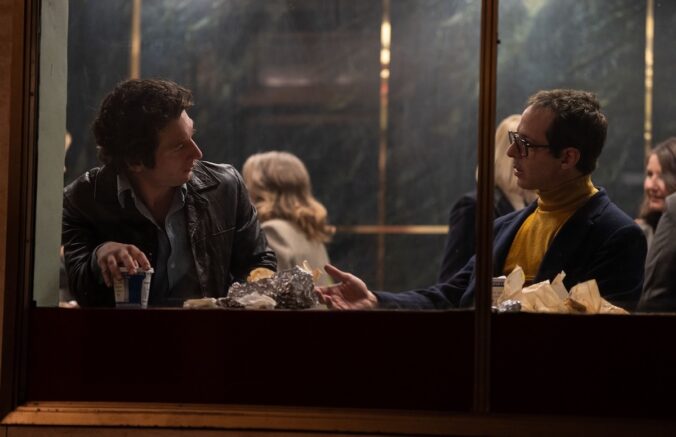
This is the book that got turned into a Bruce Springsteen biopic last year. It covers the making of the Boss’s Nebraska album, an interesting departure along the way from his rising 80s stardom.
I’d say I enjoyed the book as much as I enjoyed the film, though they hit different aspects of the story. In the book, we get much more insight into the mindset of a guy writing stories about ordinary Americans at the dawn of the Reagan Era. And we get in depth reflection on the transition from great songwriter who still flies a bit under the radar to one of the largest stars of the decade.
I also came away from this book with a great appreciation for the transitional role the Nebraska album played, both in Springsteen’s career and in the history of music. That so many people imitate Nebraska today takes nothing away from its significance, and more importantly, its sheer enjoyability.
As far as albums go, it has greater potential to shock and amaze than most of what’s out there.
