We march on to our third entry in this year’s reading list. Hopefully we do so with an eye toward spring. But I suppose we’ll see.
This month’s list is especially eclectic. In it, we’ll see everything from politics and philosophy to literature and medicine. Let’s get to it!
Ezra Klein and Derek Thompson – Abundance
Abundance is a spirited defense of a society built around the goals of professional class liberalism. Specifically, it argues that we should do more to build a larger, more robust economy. In that sense, this isn’t the ‘liberalism’ of Democratic Party neoliberalism. Rather, it’s a larger, more systematic liberalism.
Readers know the strengths and weaknesses of all that.
But do Klein and Thompson do a good job? In some ways, they do. They advocate for a more active government that builds things, typically by removing obstacles to the building of things. Of course, many of these ‘obstacles’ are regulations that keep people safe and democratic controls that people exercise over their communities.
However, the largest problem with the book is that while it defends a few worthwhile projects, it ignores the reality of how capitalism actually works. They do so on housing by promoting the YIMBY movement, a collection of business interests masquerading as an ‘affordable housing’ coalition. They do so on climate and medicine by setting aside the role finance capital plays.
And so, their core opposition between abundance and scarcity doesn’t quite land. Our main obstacles to abundance aren’t popular attitudes or policy initiatives. Rather, it’s the rule of finance capital – a problem Klein and Thompson seem uninterested in addressing.
Harper Lee – The Land of Sweet Forever
This is the latest – and (hopefully) final – book published by whoever is running the estate of Harper Lee. It puts together a handful of short stories and a handful of brief essays to offer a glimpse into Lee’s thought process and writing process.
The stories sketch out earlier versions of classic characters and themes from To Kill a Mockingbird. They’re not great stories, nor, often, even good ones. But they do have their moments. Ultimately, they come off as incomplete and/or unfinished.
However, for a reader looking for greater insight into Lee’s writing, they could offer value.
The essays, however, have little to recommend them. They’re short, pithy, and honestly, not worth re-publishing. Where does that leave us? For most readers, I’d recommend re-reading To Kill a Mockingbird. Even Go Set a Watchman is more worthwhile than this collection.
Finally, it’s hard not to see this book as a cash grab. And that’s why I’m not including a product link.
Julie McFadden – Nothing to Fear
McFadden is a hospice nurse who provides a helpful and informative look at hospice and related topics. She covers everything from stigma and insecurity around death to factual matters about what it’s like to die and watch someone die.
One point she repeatedly hits is that the body, in many situations, is built to die. In cases of long-term illness and decline, the body prepares itself and the person for death. Death, in a hospice setting, need not be an extremely uncomfortable or painful experience. This, more than anything, should provide relief from fears about death.
I can’t recommend the book highly enough. She explains clearly what hospice care does and how it helps thousands of people and their families. She’s an advocate for dying with dignity and comfort. And
she even includes specific chapters offering practical tips for those who are dying and those who care for them.
Kieran Setiya – Life is Hard
This book is philosopher Kieran Setiya’s followup to the incredibly helpful and useful book Midlife. Like the previous book, this one offers practical, philosophically interesting tips on how to work through the struggles of everyday life.
Setiya divides this one by topic, covering everything from physical disability and pain to loneliness, grief, failure, injustice, and the absurdity of life. On each topic, he offers thoughtful discussion and practical advice.
I learned from the book and found it valuable. With that said, I think he covers similar ground to his earlier book. Discerning readers might choose one or the other. But I did find it helpful to read both.
Colin Woodard – Nations Apart
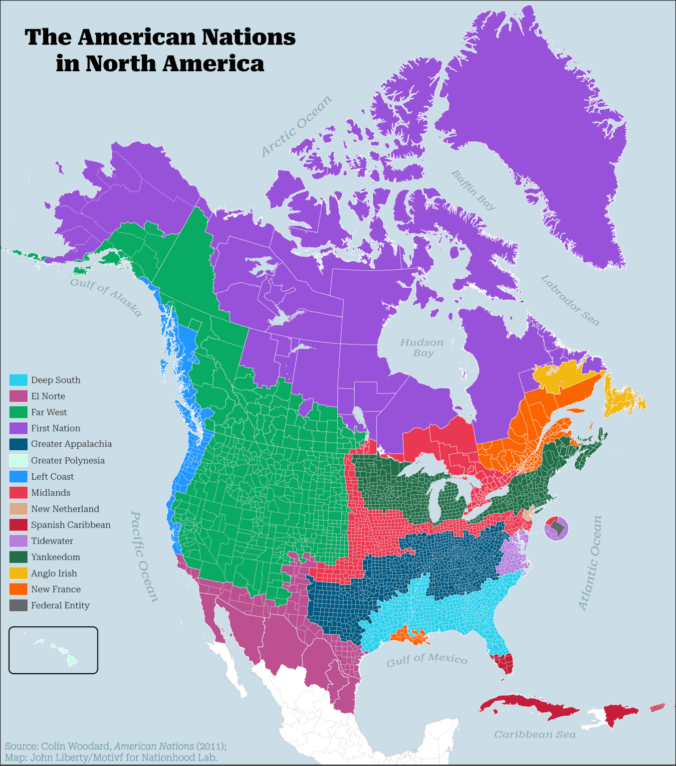
Woodard is best known for his thesis that the United States is not one country, but rather a mishmash of distinct ‘American nations’ that began in the east and spread west-ward (as well as two nations that began in the south and west and spread north-ward. In this book, he recounts (and defends) this thesis, while expanding it into an account of how to fix the U.S.’s decaying democracy.
The former project goes quite well. Woodard draws on extensive evidence to show genuine distinctions between the northern Yankeedom, the middle Midlands, a Greater Appalachia that runs through much of the mid south, and all the way to the Deep South, Far West, and Left Coast. He adds to this smaller nations such as New France, El Norte, and First Nation.
While I was skeptical the first time, I think he does a better job here. He shows that these nations don’t reduce to mere differences of race or geography.
But the rest of the project falters. He tries to discuss issues such as abortion, gun control, and climate change on his terms. But it quickly descends into the rather obvious point that the Deep South and Greater Appalachia are, at best, problematic regions holding back the rest of the country.
And his final prescriptions for renewing US democracy largely descend into the facile. He wants to put together an anti-Trump coalition that sets aside the deep economic pressures forcing the current crisis of democracy.
That’s just repackaged bland liberalism.
