Welcome to our first full spring edition of the reading list here at Base and Superstructure! Here are some of the things that I’m reading as we build into warmer weather and more sunshine.
Hope you enjoy!
Nora Berend – El Cid
Berend – a Cambridge historian – picks up the mythology around El Cid, a figure of medieval Spain. She digs into the mystery of how El Cid figures into the politics of so many different groups. From early modern Spain to its competing liberals and fascists, El Cid stands out as a central figure for all of them.
Berend begins with a comprehensive story of the
From that starting point, El Cid’s story worked out to the advantage of everyone from right-wing nationalists to liberal reformers. Berend carefully documents how his myth grew over time – from its use by a monastery struggling to survive to a 20th century dictator. There was even a Charlton Heston and Sophia Loren film.
As an aside, I first heard about this book in the London Review of Books, to which my partner recently subscribed. I found it worthwhile, so I’m hoping for good future recommendations from the LRB!
David Brin – The Postman
My book club chose this book as its selection for a dystopian fiction month. Overall, my impression was that the book had a great concept, but the execution was uneven. And try as I might, I couldn’t shake the temptation to imagine the main character as Kevin Costner, who played him in the movie version.
So, what happens? It’s not totally clear. There’s some sort of ‘Doomwar,’ followed by waves of disease. This leaves the world in a primitive, near medieval state, full of isolated, small towns and villages. The main character, Gordon, travels by foot from Minnesota to Oregon putting on shows and plays to make a living.
His myth building continues when he finds a U.S. mail uniform. From that point forward, he pretends to be a mailman from the reconstituted United States, allowing his story to take on a life of its own. Along the way, we see battles with a medieval survivalist sect and a masterful head fake with a supercomputer.
Again, it’s an interesting story. But it’s dated in a variety of ways, notably around gender and language. Our group found plenty of interesting material to discuss, and we had fun with it.
Kirsten Miller – The Women of Wild Hill
This is a modern tale of witches with an overlay of Second Wave feminist and cultural difference politics.
Miller tells a five generation story of a family of witches that sets out to remove all the damage that men have done to the world with war and climate change. She does an excellent job developing both the underlying myth and the characters. The myth involves travel from a Scottish castle to the United States. And the characters slowly build their powers until they’re ready to strike.
The story is compelling and well told. Each character adds something new, building to our ultimate lead character, who’s a young gourmet chef.
I enjoyed the book a great deal, and my book club had a good time discussing it last month.
Daniel Steinmetz-Jenkins – Did It Happen Here?
This is a collection of essays that, hopefully, constitutes a summary or ‘final word’ of the Great Fascism Debate of 2016-??? (hopefully 2026, but probably not).
And while a few of the essays hold promise, most involve writers talking past one another. Historians point to the actual precursors of fascism that are missing in the modern day U.S. – a major world war and a threat to capitalism. Meanwhile, others point to various attempts to use ‘fascism’ as a loose label to spur people to action, appealing to the black radical tradition and various liberal and progressive traditions.
With that said, it’s not all bad. Jan-Werner Muller effectively contextualizes the debate, while Danny Bessner and Ben Burgis make the proper concession that there’s nothing necessarily ‘wrong’ with using the debate for shock value.
Samuel Moyn’s essay does a nice job patiently explaining the risks of using ‘fascism’ loosely. And Anton Jager does an excellent job reframing the actual risks of the U.S. far right. In short, they’re drawing less on fascism than on specific, alienating trends of the modern world, particularly our isolation into internet based ‘communities.’
On the whole, though, I think we should move from talking about ‘fascism’ to talking about the actual characteristics of the U.S. far right.
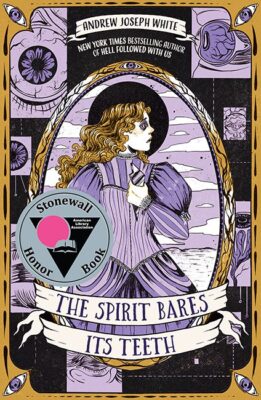
Andrew Joseph White – The Spirit Bares Its Teeth
On the face of it, this is a YA novel about a young trans and autistic boy. He communicates with spirits and struggles through a Victorian era set in gothic horror.
That sounds interesting enough. And, indeed, it’s an interesting book.
Plot wise, the book is set in the late 19th century. And it’s a world where communication with spirits plays a central role in UK society, especially within the secret society our main character is born into. Not only does that world not accept his boyhood, it also ‘values’ him for the color of his eyes.
Unfortunately, in practical terms, this ‘value’ makes him a prize. It makes him a person to be married off to a powerful man. Lucky for our main character, this ‘man’ turns out to be a trans girl. And they gradually begin tackling their challenges together.
There’s far more to it than this, of course. But I won’t spoil the details for readers. It’s a compelling enough plot, and the blog plausibly works through trans and autistic challenges in another era. On intellectual grounds, I found it interesting to consider whether the author could plausibly translate very modern notions into a society before they were explicitly named.
And I think that goes well enough here. My sense, though, is that White is very much a themed author and that reading one of his books is probably enough.
