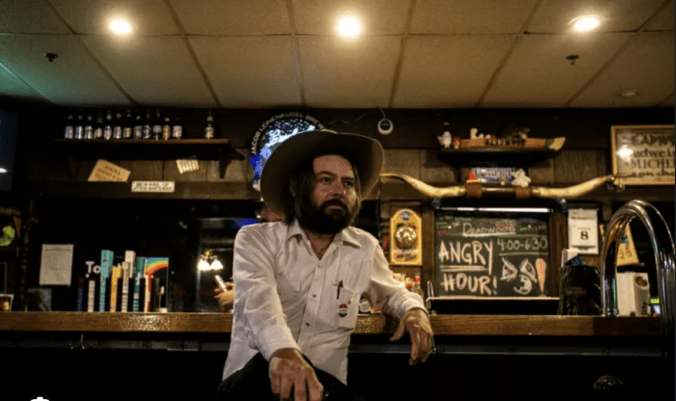
Jon Green easily won his June primary election. But JC Dems have mixed feelings about it.
Facing multiple challengers, he pulled out 49% of the popular vote, finishing nearly 20% higher than the second place candidate. And he won 13 of 14 precincts, losing the 14th by only three votes. This looks curiously similar to Green’s last election in 2022. In that one, he faced a spirited primary challenge from a Democratic Party insider.
But there’s something curious about Green’s appeal to the electorate. Consistently, he’s more popular with independents and in the general election than with the loudest and most active members of his own party.
That’s worth thinking about.
A few weeks before the primary, I made the following post on Facebook: Democrats should carefully reflect on why they don’t like Jon Green. I suspect the answer to that question says a lot about why most Iowans dislike their party and why their party, as presently constituted, has no long-term electoral viability in Iowa.
In re-posting here, I wanted to raise the challenge for a broader audience. JC Dems should think about why they don’t like Jon Green. And they should think about what this says about their prospects of building a party that can compete in electoral cycles that aren’t nationwide blue waves (i.e., most of them).
The Jon Green Test for JC Dems
Let’s get straight to the point. Iowa Democrats aren’t popular. They’ve lost election after election since 2012. And despite the fact that they might win the gubernatorial election this fall in a blue wave, their medium- and long-term trajectory still looks terrible.
Many Iowa Democrats, of course, remain in denial. They think that doubling down on their highly educated, suburban plus college town plus urban coalition is going to eventually constitute a majority. But that’s never going to pan out. And Rob Sand’s campaign isn’t premised on it, anyway. He’s banking on winning in an enormous blue wave. This might work, but it works only in 2026. And it might not even work in 2026.
So, for now, let’s set that aside. I can’t save everyone who’s in denial. For Johnson County Democrats interested in things that might actually work for building a better medium-term and long-term Democratic Party in the state of Iowa, I’d recommend taking a look at Green.
Why is he more popular with independents and less active voters? I’ve explored the topic a couple of other times. And I’d encourage JC Dems to look beyond the standard identity/racial reduction answer. White maleness didn’t help Fred Hubbell, and it’s not most of the story with Green, either.
Instead, it’s worth looking into Green’s overall image, framing of issues, and taking of more comprehensive, populist stances on issues. That might not be appealing to highly educated Democratic technocrats, but it speaks more to most Iowans.
And that’s something the Democratic Party isn’t doing very well. By contrast, Green shows how to take left leaning positions in a way people understand and resonate with. Moderate Democrats instead take moderate and right leaning positions in ways people don’t understand and resonate with.
“Both Sides”
Finally, Green first sought office as the ‘progressive’ candidate, within Iowa City’s unique college town politics. Since then, he’s continued with that ‘faction,’ though he’s no longer their favorite candidate.
For the most part, though, that’s a good thing. Iowa City’s ‘progressive’ faction often eschews actual leftist ideas in favor of an odd blend of radlib and ultra-progressive posturing. They often place this posturing in front of – and in conflict with – commitment to a social democratic route to power.
That’s bad both from a policy perspective and from the perspective of building a larger political coalition that can compete statewide. Rather than fighting for and celebrating actual social democratic victories, such as our public housing development on Summit St., we end up mired in culture wars and symbolic politics.
Green does this far more carefully and selectively, which sometimes irritates the local progressives in all the best ways.
This comes in addition, of course, to all the ways he irritates Democratic Party ‘establishment’ and ‘moderate’ types.

Leave a Reply