Iowa Democrats have spent nearly a decade and a half in the wilderness. The trip started around the time Chet Culver lost his bid for re-election in 2010. It never stopped.
From that point, Democrats lost statewide races from the top of the ballot to the bottom, with Obama’s 2012 win one of the few successes. State Auditor Rob Sand, who we’ll talk about shortly, is another.
Why?
It’s a long story. That story runs through the decline of unions, political shifts in the 2010s, and partisan realignment by educational attainment. Every left of center Iowan has their own (usually self-serving) story to tell. But each one ends the same way – Iowa Democrats are left playing for a firm minority of the electorate.
They’ve done little to solve the problem.
Several years ago, I called for Iowa Democrats to build a 2030 coalition. Why? With Iowa’s hard turn to the right, it’s unlikely their current coalition will win. So, they should build a future coalition that can win. That coalition rests on the strength of young people, political independents, non-whites (especially Latinos), and immigrants. These are all growing populations who often don’t vote for Democrats.
But Iowa Democrats weren’t interested in a 2030 coalition. They wanted to win now.
Rob Sand and the 2030 Coalition
To make a long story short, they didn’t win now. And to put it mildly, the ‘win now’ mentality didn’t get them anywhere. Democrats repeatedly nominated candidates who appealed to their base of upwardly mobile, college educated people (e.g., DeJear) or who (allegedly) appealed to rural voters, moderates, and older Iowans (e.g., Hubbell, Greenfield, Franken).
And so, by ‘winning now,’ Democrats lost again and again. In doing so, they also failed to appeal to the voters they need in order to win later.
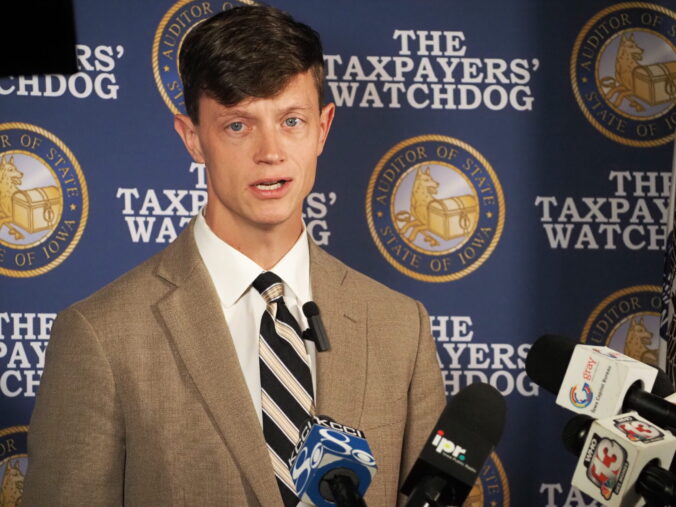
As we head toward the 2026 gubernatorial election, Democrats look like they’re going to run Rob Sand. Will that work out any better for them?
Maybe.
Sand, too, is a ‘win now’ candidate. He won’t build a 2030 coalition, but he credibly appeals to the current electorate. Indeed, unlike the graveyard of failed Iowa Democratic candidates, Sand has actually won statewide! And so, we have at least some reason to believe he could win the election for Governor.
By contrast, candidates like DeJear and Franken never really had a shot. Democrats, then, have found a ‘win now’ candidate who might actually win now.
However, Democrats shouldn’t overlook the negative side of the ledger. Sand is young, but he’s not young is an interesting or transformational way. Rather, he’s young in that ‘guy you take home to your grandparents’ sort of way. He’s kind of a nerd, but not in that ‘surprisingly appealing’ sort of way.
His role as state auditor appeals to policy wonks and good government types rather than to people who struggle or who want public policy that changes lives. Young voters aren’t excited about Sand. He’s not winning over people who don’t vote. Nor does he excite immigrants or non-white voters.
To me, Sand comes off as a more successful Hubbell or Greenfield.
Iowa Democrats and the Future
In short, if Sand loses, Democrats are no better off than they were in the later 2010s or early 2020s. And even if he wins, he’s a short-term solution to a long-term problem.
Democrats would still need to build a 2030 coalition. Sand won’t alleviate the need to build a base.
