I love summers in a college town. From reading on the front porch to visiting one of our local parks, I always have plenty to do.
Most people enjoy novels or light reading in the summer. But lately I’ve been knocking back the non-fiction! So, that’s what most of my list for the month will focus on.
And, as always, let me know what you’ve been reading lately.
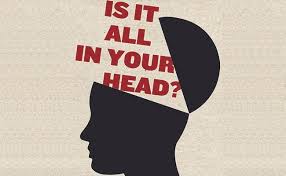
Suzanne O’Sullivan – Is It All In Your Head?
O’Sullivan is a neurologist writing about psychosomatic disorders. These are conditions that produce physical pain for psychological reasons. Many patients show symptoms of organic diseases that turn out to be produced by that person’s psychology. And given the widespread negative social impact mental illness has on a person, they resist these diagnoses.
As O’Sullivan emphasizes again and again through many examples, these are real conditions. People can go through everything from seizures to blindness for psychological reasons. And psychosomatic disorders even produce unique marks in medical images.
Why do these disorders happen? O’Sullivan lays out various theories.
She finds plausibility in the notion that trauma can cause the unconscious and conscious minds to disassociate. She also points out how psychosomatic disorder changes across time and place. In one of her more interesting examples, psychosomatic seizures even lead to an improved relationship with the person’s spouse.
This book makes for an excellent accompaniment to Ian Hacking’s work on interactive kinds. I referred to that work extensively in my own dissertation and first book. And I wish I had this book 15 years ago.
Marla Paul – The Friendship Crisis
Marla Paul writes this practical guide to finding and keeping friends as an adult. In it, she collects a wide range of stories on what goes wrong in friendships and how to fix those practical problems. And while the book focuses solely on friendship among women, I could find a few useful tidbits for my own world.
It’s not the best or most thorough treatment of the subject. But the book does its job in a way that’s handy and accessible. Paul focuses heavily on stories and anecdotes, but she tells them in a way that makes it easy to apply to one’s own life.
Massimo Pigliucci, Gregory Lopez, and Meredith Alexander Kunz – Beyond Stoicism
This book comes from three authors who follow some flavor of Stoicism in their lives and work. In it, they provide a general survey of ancient Greek philosophies with an eye toward using them as ways of living in the modern world.
It’s a comprehensive treatment, running from the beginnings of philosophy through Neoplatonism. They divide the various schools into ‘ports’ – pleasure (Cyrenaics and Epicureans), character (Aristotelians, Stoics, Cynics, and Platonists), doubt (Socratics, Protagoreans, Academic Skeptics, and Pyrrhonian Skeptics), and a miscellaneous category (Pythagoreans, Megarians, and Neoplatonists).
For each school, they cover its basic views with a focus on what it has to say about flourishing in life. And they include exercises to guide readers through putting the ideas into practice. I could very well imagine using it in my own philosophical counseling practice.
It’s always a challenge to balance good scholarship with practical life advice. But this book pulls it off. Even as someone already familiar with most of the philosophy, I found myself excited to try some of the exercises at the end of each chapter.
Aminatou Sow and Ann Friedman – Big Friendship
These two best friends co-hosted the podcast Call Your Girlfriend, which covered their friendship and its dynamic. This book lays out their thoughts on friendship – how to sustain it, its usefulness for life transitions, and how it begins with a platonic spark.
They focus on some of the themes and jargon from the podcast, such as ‘Shine Theory.’ This is the idea that a friendship is built around happiness at the success of our friends. ‘You don’t shine unless they shine.’ And we develop our friendships by ‘stretching,’ or allowing our friendships to expand our world.
For a couple of helpful ideas, they point to Stephanie Coontz – a historian of marriage and family – in arguing that the gendering of friendships has starkly changed over the decades. And their closing chapter situates friendship in the life of a middle age person. They argue, quite implausibly, that it’s currently undervalued for 30- and 40-somethings. It’s friends who will eventually see us through life’s difficulties.
On the less useful side, the book (and podcast) shows many signs it comes from the world of corporate feminism, albeit the more interesting, ‘intersectional’ segment. That is to say, the politics remind me of Kirsten Gillibrand. And it carries all the downsides of that – a focus on white-collar issues, a grounding in fetishistic ideas about identity, especially race, and so on.
But it’s a worthwhile read.
Jake Tapper – Original Sin / Chris Whipple – Uncharted
I added these two books to what I’ve read on the 2024 campaign season.
Tapper’s book is the spicy one that got lots of press attention.
He makes the case that Joe Biden’s mental and physical decline started well before 2024 and that his closest advisers and aides covered it up. More broadly, he presents the 2024 campaign as a Greek tragedy – by not dropping out earlier, Biden caused the very event his campaign was designed to prevent, i.e., the election of Trump.
I think Tapper does a great job arguing for the former claim, but doesn’t provide a convincing case for the latter.
He gives us an impressive range of interviews and reports dating Biden’s decline as early as 2015-2017. But he doesn’t show how any of this cost Democrats the 2024 election. He asserts that a competitive primary would’ve produced a better candidate. To that, I’d say ‘maybe.’ But any candidate would’ve taken the blame for inflation and faced the same problems that took down incumbents worldwide in the 2020s.
By contrast, Whipple’s book got much less press, and justifiably so. It’s barely 200 pages, and it takes about 50 to even get to the 2022 midterms. We don’t get to the Kamala Harris candidacy until over halfway through the book.
Within those constraints, it’s well reported and organized.
Whipple lays out a simple question – whether Biden’s delay in dropping out cost Democrats the election – and provides a qualified ‘yes’ answer. Why? He says Harris’s connection to Biden’s unpopularity cost her the face. And, again, I say ‘maybe.’
Any Democrat would’ve faced the same challenge.
