
The business literature says middle managers form an essential part of the company. But, really, why do companies have middle managers? Do they perform some essential task or service? Do they serve some rhetorical or ideological function? I’ll lay out some thoughts on middle managers, what they do, who they serve, and why the role exists.
Category: Culture (Page 20 of 23)
These are posts on culture from the blog Base and Superstructure. Mostly the focus is on American culture. But there might be a few posts on broader, international issues.

I’m taking a bit of a vacation to New Orleans this week! As a result, if there aren’t many posts or I’m not too responsive, don’t be alarmed! I’m here for the 4S conference of the Society for Social Studies of Science. Here are a few things I’m doing in New Orleans.

People talk about ‘authentic food’ or ‘authenticity’ during discussions of cultural appropriation. That’s a frequent site of disagreement. But I think it’s worth talking about those phrases in their own right. Not that I don’t have any thoughts on cultural appropriation. Maybe I’ll write about that later. For now, check out Briahna Joy Gray’s article in Current Affairs as a starting point.
‘Authenticity’, in general, and ‘authentic food’, in particular, raise their own issues.
The fact is, ‘authentic food’ is all the rage. Diners and reviewers alike demand it. When you turn on Food Network, you see celebrity chef Aarón Sánchez judging Chopped contestants on it. And when the show goes to commercial break, you listen to him tell you to ‘go auténtico’.
And it’s not only reviewers and diners. There’s a broad consensus on this. Plenty of left-leaning critics of cultural appropriation, particularly ones found on social media, also uphold the virtues of authentic food. Along with it, they extol the virtues of broader notions of authenticity.
What should we make of all this? A few leading questions: What do people mean when they talk about ‘authentic food’? The same thing? What kind of a word is ‘authentic’? Where do broader cultural practices enter the picture?
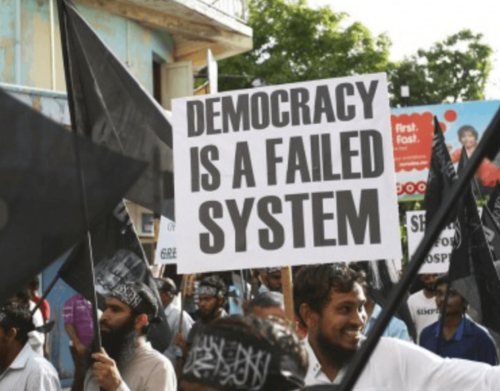
Earlier this year, William Davies published a book called Nervous States: Democracy and the Decline of Reason. The book’s about a number of things, but I want to focus on one of them. That’s the declining trust in democratic institutions among Americans. But this declining trust isn’t consistent across institutions. It’s unevenly distributed.
So which ones do Americans trust and distrust? We see declining trust in the media and in elected representatives above all. And we see the least declining trust in doctors, nurses, the military, and (perhaps) the police.
Let’s speculate a bit about all this.

About ten years ago, Alain de Botton wrote a book called The Pleasures and Sorrows of Work. It’s a perfectly fine book, not a great book. From the great tradition of writing about working, I far prefer the live interviews of Studs Terkel. And so, I’d greatly recommend his book Working.
But there’s something I do find admirable about de Botton’s The Pleasures and Sorrows of Work. Especially insofar as it says something about working in a corporate office.
