As we move through the fall and to the end of the year, I’ve put together an eclectic group of books this month. For readers looking for variety, this will be a great list.
Read on for this month’s list.
Continue reading
Alienation, autonomy, and ideology
These are posts about books from the blog Base and Superstructure. Occasionally I’ll read a book worth talking about, and write some thoughts on it. These cover a wide range of topics from the blog.
As we move through the fall and to the end of the year, I’ve put together an eclectic group of books this month. For readers looking for variety, this will be a great list.
Read on for this month’s list.
Continue reading
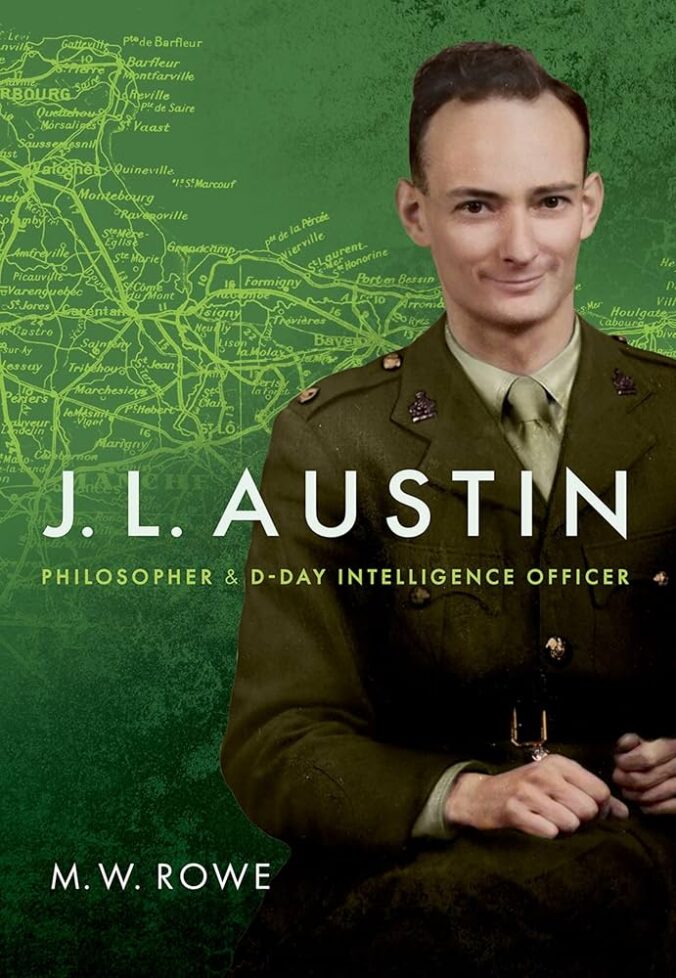
It’s unclear how many people want to read a 600 page biography of Oxford philosopher J.L. Austin. But count me among them. As an undergraduate, I made Austin’s paper ‘Other Minds’ the topic of my honors thesis. And even 20 years later, I’ve never lost the sense that there was something right about the method of ‘linguistic phenomenology’ Austin used in much of his work.
What was right about it? And how did it influence my own philosophical work? It can be difficult to say. I didn’t directly develop Austin’s ideas in my own articles and books. But my conceptual work begins from an understanding – we should situate philosophical concepts in relation to the everyday. This is to say that we must first understand – and only then expand upon or improve – ordinary notions.
As Austin put it, ordinary language is the first word.
On this blog, I’ve written a couple of reviews of books on Austin’s work. Readers can check those out here and here.
And so, with all this said, I was excited to read M.W. Rowe’s biography of the giant of ordinary language philosophy.
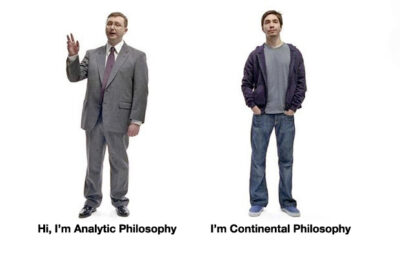
I should start by saying that I found Christoph Schuringa’s A Social History of Analytic Philosophy enjoyable and informative. But it’s also rather spicy. Above all, it’s never dull.
I can live with that combo.
As someone trained in analytic philosophy, readers might expect me to dislike A Social History of Analytic Philosophy. After all, Schuringa takes an unsympathetic approach to the field. On the other hand, I did work that crosses the borders between the analytic and the Continental. And I sympathize with the critique of even ‘dissident’ analytics as using abstract and disengaged methods. So, readers might expect me to love it.
In reality, I neither disliked nor loved the book. I thought it had its merits and shortcomings.
First of all, this month’s reading list is coming out late due to my earlier travel to London. Sorry about the lateness!
Next, readers will find this an unusual version of the monthly reading list. In preparation for his new novel, I re-read a lot of John Scalzi in the last couple of months. I’ve collected all that into October’s reading list.
Hope you enjoy!
A couple of months ago, I posted a retrospective of my work in academic philosophy. Primarily, that work concerned the use of practices as a fundamental unit of investigation in the social sciences and social philosophy. But I also had a lot to say in my work about labels.
My first book covered the topic extensively. In it, I laid out a three-part model of how labels interact with the people the labels pick out. And I explored a wide range of case studies in the social sciences and everyday life.
As it turns out, labels aren’t just inert, lifeless tags we place on something. They come to life. In many ways, classifying people isn’t like classifying rocks.
And so, I approached The Age of Diagnosis by Suzanne O’Sullivan with both excitement and trepidation. It promised to take on a topic very much up my alley. But it’s far easier to address this topic poorly than to do it well.
I shouldn’t have been so nervous. The Age of Diagnosis is very much worth a read.
The author is a neurologist who often treats patients who present with symptoms of psychosomatic illness. And in The Age of Diagnosis she brings her expertise to bear on a uniquely contemporary problem. She covers the vast, often problematic explosion in medical diagnostic labels.
© 2026 Base and Superstructure
Theme by Anders Noren — Up ↑