I read Homer‘s Odyssey much later in life than pretty much everyone else. For a bit of fun, here are some of my reactions from when I was an early 30s, first-time reader.
Alienation, autonomy, and ideology
These are posts on culture from the blog Base and Superstructure. Mostly the focus is on American culture. But there might be a few posts on broader, international issues.
We hear a lot of grumbling about the so-called ‘liberal bubble’. The idea seems to be that many Democrats live in a certain state of political and social isolation.
The details vary, but we can sketch out certain features of the liberal bubble. It’s supposed to look like this: major urban area or college town, highly educated population, mixed income but higher class standing (i.e., not proletarian), strong cultural amenities, and strongly Democratic at the ballot box.
What are these places like? If they exist, so what? Are they a problem?

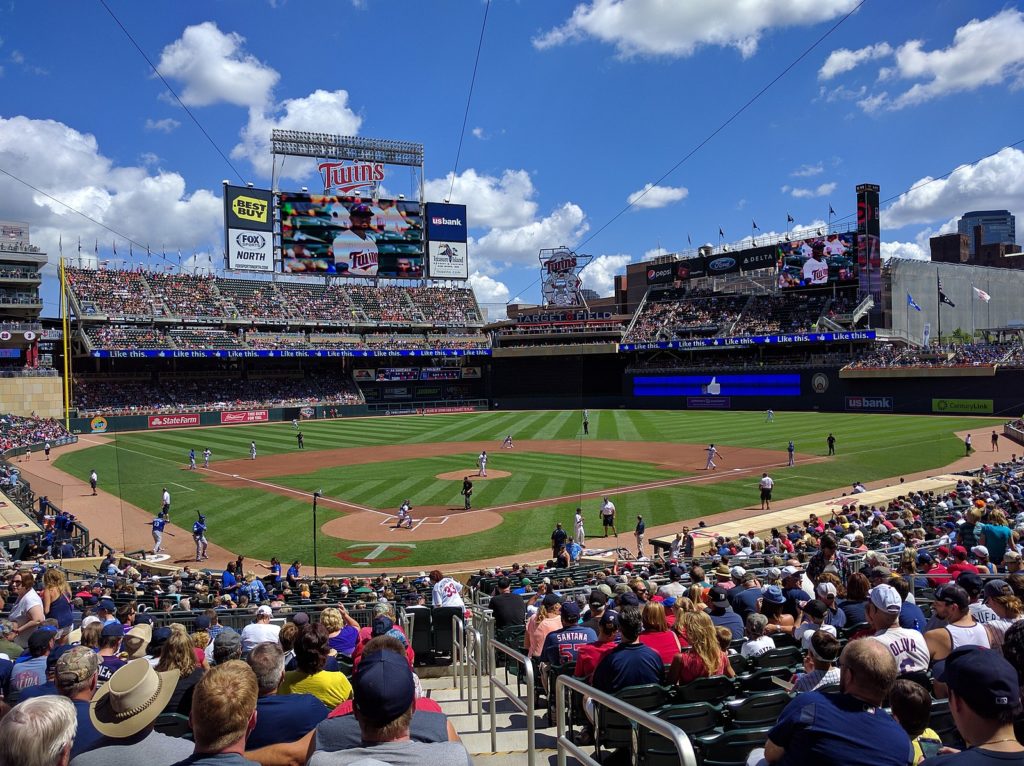
Winter’s still here and spring training is barely underway. Let’s face it: most people aren’t paying attention to spring training. Sports writers are getting antsy. Once again, we get the annual complaint that baseball is too boring.
Nonsense. Keep baseball boring.
Continue reading

Source: Wikimedia Commons (https://commons.wikimedia.org/wiki/File:The_Negro_Motorist_Green_Book.jpg)
Green Book was an OK movie, not a great movie or even a good one. It’s in good company on the list of Oscar Best Picture nominees. You could make an awards case for Roma, but any of the others would’ve been a weak choice. Bohemian Rhapsody and Vice were the worst of the bunch. Neither of the two best movies I saw in 2018 (Sorry to Bother You and A Quiet Place, respectively) made the list.
Grumble, grumble.
I’ve got an upcoming post on the concept of the ‘liberal bubble,’ and what I’ll say here will preview that a bit. A lot of the criticism of Green Book from a particular set, namely highly educated, wealthier, white, ‘woke’ liberals, runs into a sort of bubble issue.
These days, many of us take some form of social constructionism about race for granted. And why shouldn’t we? But the victory over racial myths wasn’t easy. It was one of the most important wins of activist waves of the 1960s-70s. It overturned the reign of ‘racial science.’ And it dislodged, for many people, the idea that people are born as members of some natural category called ‘race.’
I find that those old racial myths are making a comeback. And on multiple political fronts. Including ‘left-wing’ fronts. Let’s talk about that.
Race is real. But it’s real in an entirely social and historical sense. It’s not encoded in genes. Rather, race, as a category, played a historical role. In late feudal and early capitalist societies, it justified the forced labor regime of white plantation owners and enslavement of black people. Those decisions still impact the world. The racial science and racial myths supporting those decisions are bullshit.
So far, so good. Now let’s get on to the return of racial myths. As I wrote above, I think they’re returning in a big way. On the right, surely, but also on the ‘left’, through identitarian tendencies.
I’ll examine a few of these racial myths in this post. This won’t be a complete list.
© 2026 Base and Superstructure
Theme by Anders Noren — Up ↑