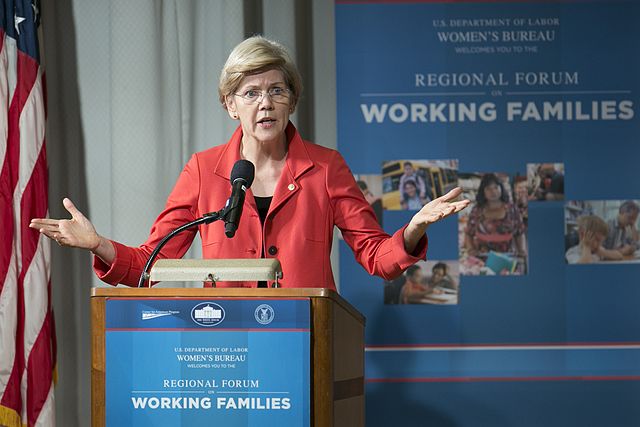
Source: Wikimedia Commons (https://commons.wikimedia.org/wiki/File:Elizabeth_Warren_speaks,_May_19,_2014.jpg)
2004 was the first year I was old enough to vote in presidential elections, and I quickly found it’s a depressing experience. But it’s easy to do. I’ll start thinking about voting for someone once I’m convinced they’ll work hard to leave the world a better place than they found it. Democratic presidential candidates never met that standard, so I never seriously considered voting for one. Depressing, but easy. Bernie Sanders complicated that in 2016. He met the standard, but he lost to Hillary Clinton. But what if there were a candidate clearly to Hillary Clinton’s left, and still to the right of Bernie Sanders? Did someone say ‘Elizabeth Warren’?
What’s going on with the Warren campaign? That’s my topic here.