Welcome to the first fall 2026 edition of the reading list! Here’s where I’m turning as summer moves into fall.
How about you? Let me know what you think, and maybe what you’re reading these days.
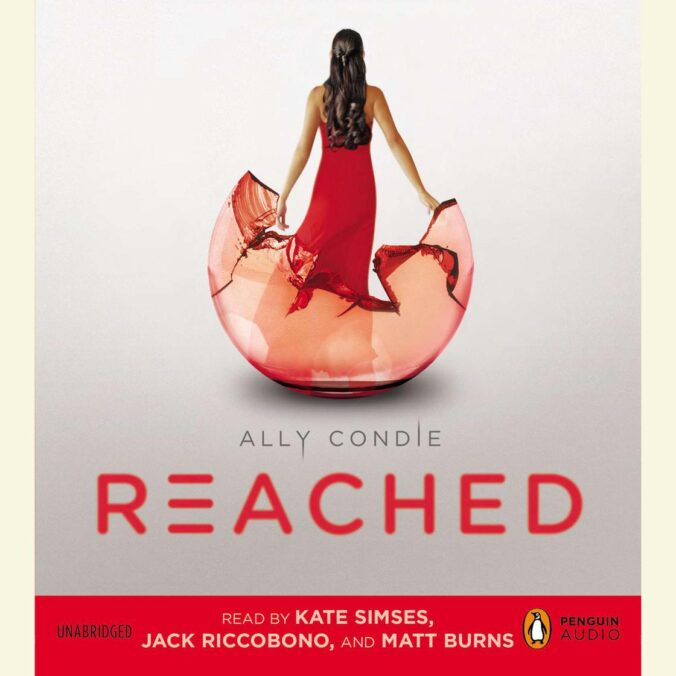
Ally Condie – Reached
Mercifully, my reading of Condie’s Matched trilogy is at an end. The third book isn’t bad as the second book, but there’s not much to say about it. It…sort of wraps up the story in a satisfying way. So, I suppose that’s a positive.
Ultimately, Condie’s trilogy sets out an interesting enough scenario in the first book and then leaves most of it on the table. In addition to the failure to address the sociopolitical issues at play, she also fails to address the core issues in the series’s central love triangle. Frankly, polyamory was the most plausible solution for not only the three main characters, but several others as well.
That goes entirely unexplored.
It’s an interesting enough fictional world with almost no follow through.
Hugh Howey – Wool
I’ve been watching Silo on Apple TV through the first three seasons, and I wanted to take a look at the source material. So, it was time to sit down with this (very large!) sci-fi novel. It’s the first in a trilogy of books in the Silo universe.
On the whole, Howey didn’t disappoint. The basic story from the TV show is there, and it goes into depth in certain areas that the show perhaps glossed over. With that said, the writing isn’t great. Howey tends to repeat certain words (try taking a drink every time someone is described as ‘weary’ in this novel!) and phrases. The writing is also often clunky and cumbersome.
That said, it’s not too distracting. Bad or middling writing has been a part of sci-fi from its beginning. And, again, the story is compelling. My recommendation is to watch the show first, and then turn to the novels second.
Stephen King – On Writing
As some readers have surely noticed, I’ve been on a kick of reading books about writing. This one came widely recommended to me, so I had a look.
Readers probably know Stephen King, even if they haven’t read him. As one might expect, his writing advice focuses on fiction, which makes up a tiny portion of my writing. But I found this one useful. King lays out plenty of common sense advice. And he peppers it with his personal stories of his own struggles with addiction and a terrible car accident.
I’d recommend it.
Donald J. Robertson – How to Think Like Socrates
I picked this up as a possible option for working with philosophical counseling clients. And I went into it without a lot of prior knowledge about what I’d expect to find, although I’ve read some of Robertson’s previous work and found it worthwhile.
While I expected to find a discussion of Socratic thought with implications for modern psychology and therapy, that’s not exactly what’s in this book. I mean, it does occur, occupying maybe 20 or 30 pages. But most of the book is an extended, partially fictionalized account of Socrates’s life and times.
The quasi-history is interesting and readable enough. But, ultimately, I found the book didn’t quite deliver.
Amor Towles – A Gentleman in Moscow
My book club tackled this one recently, and everyone loved it. It’s a historical fiction novel set in Soviet Moscow from the 1920s to the 1950s.
Our main character is an aristocratic man who inexplicably returns to Russia after the Bolshevik Revolution. He ends up in house arrest at a fancy Moscow hotel. And through him, we see developments in his life and in Russia over the course of three decades.
The main character – Count Rostov – gradually comes to terms with his situation. He builds a life in the hotel, makes friends, gets a job, and eventually raises a child. And he deals with the frustrations of life in Soviet Russia – particularly a bureaucratic waiter turned hotel manager.
I thought the book struck all the right notes. It brought in the historical environment where necessary, but it was mostly a character study about how a person evolves under tough circumstances.

Leave a Reply